
Last Updated on May 21, 2026 by YEO Chuen Chuen
Leaders bridge generational gaps and build an inclusive workplace where everyone can understand each generation’s values, communication styles, and strengths, addressing stereotypes and fostering collaboration, respect, and mentorship across age groups.
With the influx of Gen Zs, there are now five generations in the workplace. A diverse talent pool brings about varied needs and wants. Bridging intergenerational conflict is a leadership imperative vital to building high-performing cultures.
Each generation carries unique values, beliefs, and practices, including traditions, and misunderstandings can easily lead to tension. Leaders must build an inclusive environment by advancing generational leadership.
In this blog post, we will explore how generational stereotypes can lead to conflict and how leaders build an inclusive environment. With the right leadership skills and attitude, they can bridge the generational gap by leveraging each generation’s strengths.
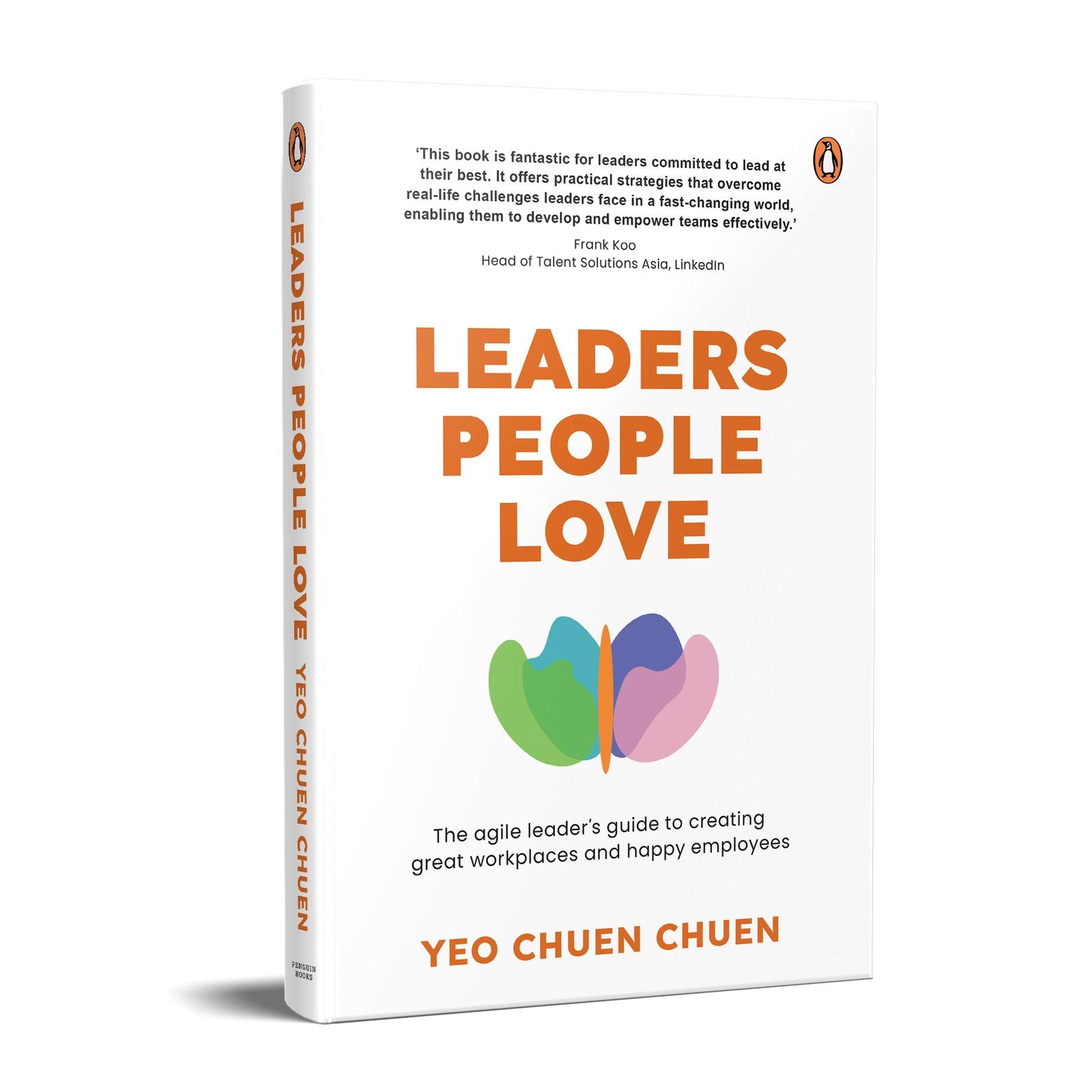
A section of Leaders People Love is dedicated to understanding the generations. Check out the book for more actionable strategies to enable an inclusive culture in a diverse workplace.
Inclusive Leadership: Understanding the Five Generations in the Workplace
Here are the five generations that make up most companies today, along with the stereotypes often associated with each.
1. Traditionalists: Born Between 1925 and 1945
Stereotypes: Often labeled as conservative, resistant to change, and strongly hierarchical. They’re seen as avoiding challenging authority and preferring traditional ways of working.
Facts: While they make up only about 4% of the U.S. workforce, Traditionalists are among the most engaged employees. They show up ready to contribute, bring a strong work ethic, and stay committed for the long term. Traditionalists are recognized as a generation that set the benchmark for loyalty, discipline, and long-term commitment.
2. Baby Boomers: Born Between 1946 and 1964
Stereotypes: Boomers are seen as loyal, dedicated workers and ladder climbers who believe long hours drive success. Many assume Boomers resist new technology because they’re not tech-savvy.
Facts: Technology skepticism isn’t universal. Many Boomers feel they’re finally catching up to current technological advancements, with 36% feeling confident using new technology, according to GWI USA.

3. Generation X: Born Between 1965 and 1980
Stereotypes: Gen Xers are stereotyped as cynical, slackers, and detached from leadership authority, making them hard to manage. Additionally, Gen X’ers often show little interest in climbing the corporate ladder, which can frustrate managers who struggle to motivate them effectively.
Facts: The idea that Gen X-ers are slackers is flawed. In fact, 62% of business leaders are members of Gen X, according to the Global Leadership Forecast 2021. A direct contradiction of the “mediocre performer” stereotype.
4. Millennials: Born Between 1981 and 2000
Millennials will make up half of the global workforce by 2050, making them an important group that leaders need to pay close attention to.
Stereotypes: They’re often characterized as entitled job-hoppers who crave constant praise and expect a trophy just to stay engaged. According to a Deloitte survey, two out of every three millennials planned to leave or move on from their current employer by 2020.
Facts: Although commonly misunderstood, millennials aren’t looking to switch jobs frequently; they’re merely seeking more beneficial positions that align with their life goals. A Gallup study found that what Millennials want is a job that feels worthwhile.
5. Generation Z: Born Between 2001 and 2020
Stereotypes: Gen Zers are labeled as rude, selfish, and disrespectful in professional settings, with little regard for workplace norms or authority. They’re seen as obsessed with social media, prone to job-hopping, and lacking the interpersonal skills needed to collaborate effectively with others.
Facts: Stanford scholar Roberta Katz’s research on Gen Z tells a different story. Gen-Zers are highly collaborative, pragmatic, and prefer non-hierarchical leadership. And while they’re undeniably tech-savvy, research shows their preferred communication method is in person.
Stereotyping Gap
The best way to understand the different generations is to listen actively and seek to understand.
Yeo Chuen Chuen, author of the award-winning book, Leaders People Love
Generational stereotyping isn’t just a cultural nuance. It’s a real source of workplace conflict, alongside race, gender, and other dimensions of diversity in the workplace.
What is cultural diversity? It refers to the variety of backgrounds, values, and life experiences people bring to a group. Cultural diversity is not just about race or ethnicity. It includes age diversity, socioeconomic status, languages, and the many ways people think and interact. And its role in the workplace is significant: teams that reflect this richness are more likely to generate creative solutions.
Generational stereotypes, while common, are unfair and unconstructive. Each generation has unique characteristics and expressions of values that influence how people work and interact. Leaders need different strategies for each group because backgrounds, beliefs, and behaviors differ significantly.
In multi-generational workplaces, generational differences aren’t necessarily the problem; stereotyping is. The difference between the generations is not just about age but also about perspectives, principles, and goals. And it’s crucial to remember that stereotyping leads to discrimination. The key is to treat people as equals, not necessarily the same, so you can understand each person’s strengths and where they can grow.
Despite our age, we can learn from each other
Sales Director, Christian Kastner
Hear from Christian Kastner on learning from other generations here.
Consequently, generational leadership plays a huge role in the success of any organization. A generational leader respects organizational values, eliminates unconscious biases, and creates an environment where people feel they have equal access.
Generational leadership drives organizational success. A generational leader respects organizational values, eliminates unconscious biases, and creates an environment where everyone has equal access.
“What might really matter at work are not actual differences between generations, but people’s beliefs that these differences exist. These beliefs can get in the way of how people collaborate with their colleagues and have troubling implications for how we, people, are managed and trained.”
Eden King, Lisa Finkelstein, Courtney Thomas, and Abby Corrington, Harvard Business Review

Common Conflicts Between Diverse Teams
With more workplaces having employees spanning multiple generations, managers face the challenge of dealing with potential conflicts within a diverse workforce.
Conflict in the Value System
Our values shape how we see life and work. When we can’t understand where someone’s values come from, getting along becomes hard.
For example, Boomers often prize hard work above all else, while Gen Xers prize versatility. Gen Zers discuss mental health more openly than any other generation, while Millennials are often highly driven by a sense of purpose. There are a variety of value systems that coexist, and diversity can be a strength when those differences are respected.
Managers must build an inclusive workplace where every value system is respected.

Conflict in Communication Style
Different generations communicate differently, which creates misunderstandings.
For example, Gen X favors informal language and open personal conversation. Baby Boomers prefer formal, clear, and concise language. Millennials and Gen Z prefer digital communication, text messaging, and social media over face-to-face interaction.
Build a culture where no single communication method dominates. Make room for all generations.
Conflict in Perspective
Different generations hold different worldviews, and that naturally produces conflict. Younger workers may hold more progressive views on gender roles and diversity, while older colleagues lean toward traditional practices.
Disparities also exist within each generation regarding topics such as technology adoption and how to measure productivity. Understanding each generation’s perspective tells you what to do next.
The key is to understand where each person is coming from, find common ground, and then build relationships on respect and trust.

Building a Multigenerational Inclusive Work Environment
Building a workplace culture that welcomes all generations takes effort. It involves using specific strategies and appreciating the different viewpoints each generation offers.
According to a comprehensive study published in the Harvard Business Review, bridging generational gaps involves:
- Promoting Mutual Respect,
- Leveraging the Diverse Strengths Across Different Age Groups, and
- Encouraging Cross-Generational Mentorship Programs.
These approaches emphasize the importance of acknowledging and valuing the contributions of all employees, irrespective of their generation, fostering a culture of inclusivity and cultural understanding.
Businesses and organizations that embrace this build a more innovative and high-performing culture. Research shows that cultural diversity in teams leads to stronger innovation and better performance. Of cultural diversity, Harvard Business Review notes that its benefits extend far beyond optics: it drives real results across societies and industries alike.
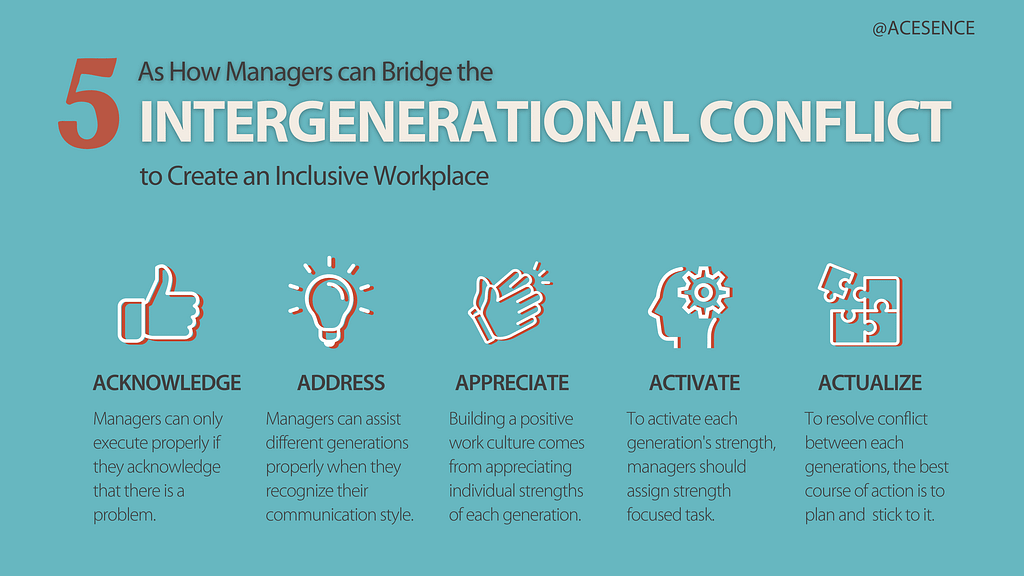
The 5 As of How Managers Can Bridge the Intergenerational Conflict to Create an Inclusive Workplace
The importance of generational leadership is unquestionable. Generational leaders must identify, address, and resolve generational differences in the work environment. This approach drives open dialogue, stronger collaboration, greater team commitment, and more innovative problem-solving.
ACKNOWLEDGE
Leaders can’t solve a problem they haven’t acknowledged. Understand where each side is coming from. Use active listening to gauge expectations and understand what each side needs from the other.
For instance, if younger employees aren’t taking initiative, meet with them to discuss it. You may find they value different things; maybe they don’t feel the need to be assertive to advance, thanks to technology and changing norms. Use that insight to shape your management style.
ADDRESS
One of the hardest challenges managers face is getting employees from different age groups to communicate effectively; miscommunication breeds resentment. Recognizing how communication styles differ equips managers to step in when conflicts arise.
For instance, Boomers tend to prefer face-to-face communication over Slack or Messenger, while Millennials favor text for its multitasking flexibility.
APPRECIATE
Recognizing each generation’s individual strengths builds a positive work culture. Let everyone play to their own.
For instance, seasoned workers who benefit from colleagues who know technology better, while Millennials tap into Boomers’ life experiences. Gen Zers thrive when given leadership roles and the chance to teach. Gen X’s relaxed management style gives younger employees the creative freedom they crave. Across the range of generations, there is something to learn from everyone.

ACTIVATE
To leverage the advantages of each generation, managers should assign tasks aligned with each generation’s interests.
For instance, a millennial might be more passionate about working on projects with social impact, while a boomer might prefer working on long-term strategy.
Another way to approach this situation is to allow each generation to play to its strengths. So if you have an employee who has been around for longer and has more experience, letting them take charge in certain scenarios can be beneficial. Team members perform best when their experiences align. with meaningful work
ACTUALIZE
When resolving conflicts among diverse generations, the best course of action is to make a plan and stick to it. This will help you choose the option that will be most successful. If you can design a positive environment, then you can work towards resolving the issue.
For instance, encouraging an open-door policy enables direct reports to bring their concerns to you directly. You can also foster a collaborative environment by encouraging your employees to share ideas. Diversity focuses on allowing each generation to contribute; managers can foster an atmosphere of collaboration and understanding that will benefit everyone.
Overall, bridging the gap between different generations in the organization can be a complicated process. It requires generational leadership in which managers prioritize each group’s interests, ensure everyone is treated fairly, and create an environment that allows everyone to work together without friction.
If diverse companies want to be successful and truly promote inclusivity, they must focus on generating new insights and proactively pursuing inclusion efforts.
Generational leadership is also about understanding the generational differences among employees and recognizing their individual needs, strengths, and abilities. By acknowledging generational differences and encouraging collaboration through diversity efforts, managers can help build above-average profitability, succession planning, and next-generation leadership. With the right approach, managers can cultivate a company culture of respect and understanding that encourages each generation to maximize its organizational potential.
Did you know our best-selling program, CliftonStrengths for Maximum Impact, is excellent for bridging the generational gap? Check it out here.
Frequently Asked Questions
What are the common challenges faced when leading a multi-generational workforce?
The most common challenges stem from conflicts in value systems, communication styles, and generational perspectives, all of which are amplified when leaders allow stereotyping to replace genuine understanding of each individual’s strengths and needs.
What are some best practices for leaders to unlock the potential of a multi-generational workforce?
Leaders unlock multi-generational potential by promoting mutual respect, intentionally leveraging each generation’s diverse strengths, and encouraging cross-generational mentorship, creating a culture where age diversity drives innovation and performance rather than conflict.
How can leaders create an inclusive environment for all age groups in the workplace?
Leaders can create an inclusive environment by applying the 5 As framework: Acknowledge, Address, Appreciate, Activate, and Actualize to understand each generation’s unique values and strengths, while eliminating unconscious biases that prevent equal access and opportunity.
Ready to Take the Next Step?
Chuen Chuen has supported leaders from nearly 40 countries across industries. These leaders face similar challenges to yours. If you’re looking for 1-to-1 coaching, team training, or a speaker, let’s talk about what your organization needs.
[Executive Coaching] [Corporate Training] [Speaking]ganization will become agile, adaptive, and future-resilient.